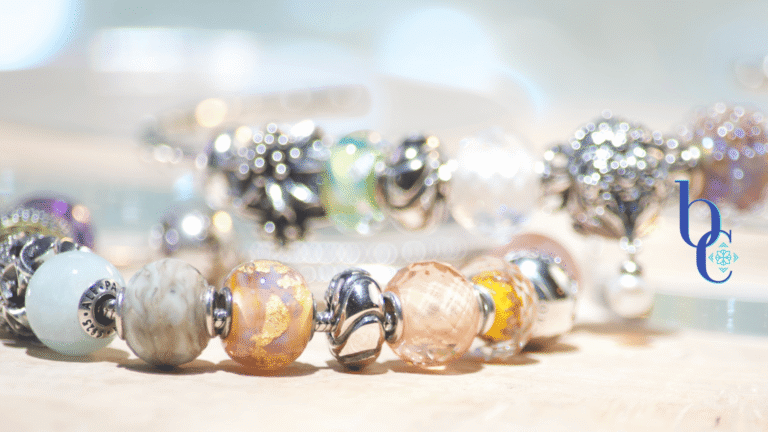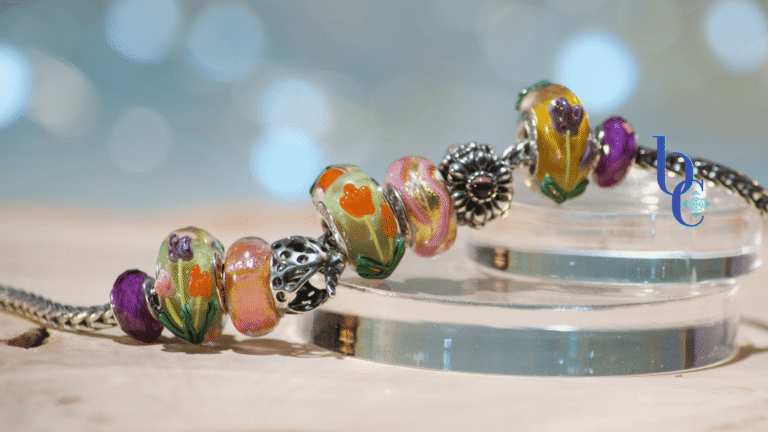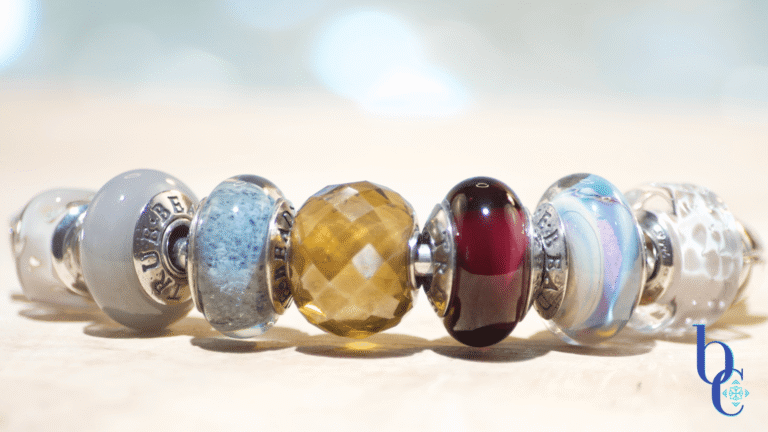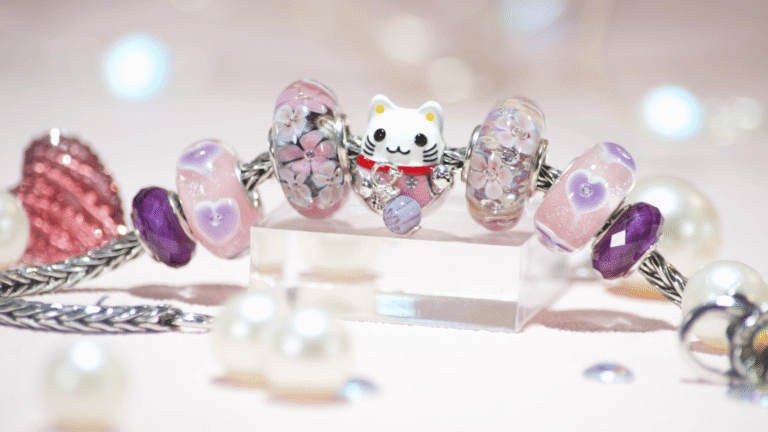
The Un-Manicured Wrist: Why Your Butterfly Garden Should Be Asymmetrical
Close your eyes and imagine a garden.
If you pictured perfectly trimmed hedges and rows of identical red tulips, you are thinking in “Beige.”
Now, imagine a secret garden. A potting shed door left ajar. Wild lilacs tumbling over a whitewashed fence. Bursts of chartreuse vines climbing through soft pink roses. It smells like rain and nectar. It sounds like the faint, high-pitched chime of windcatchers and the buzz of wings.
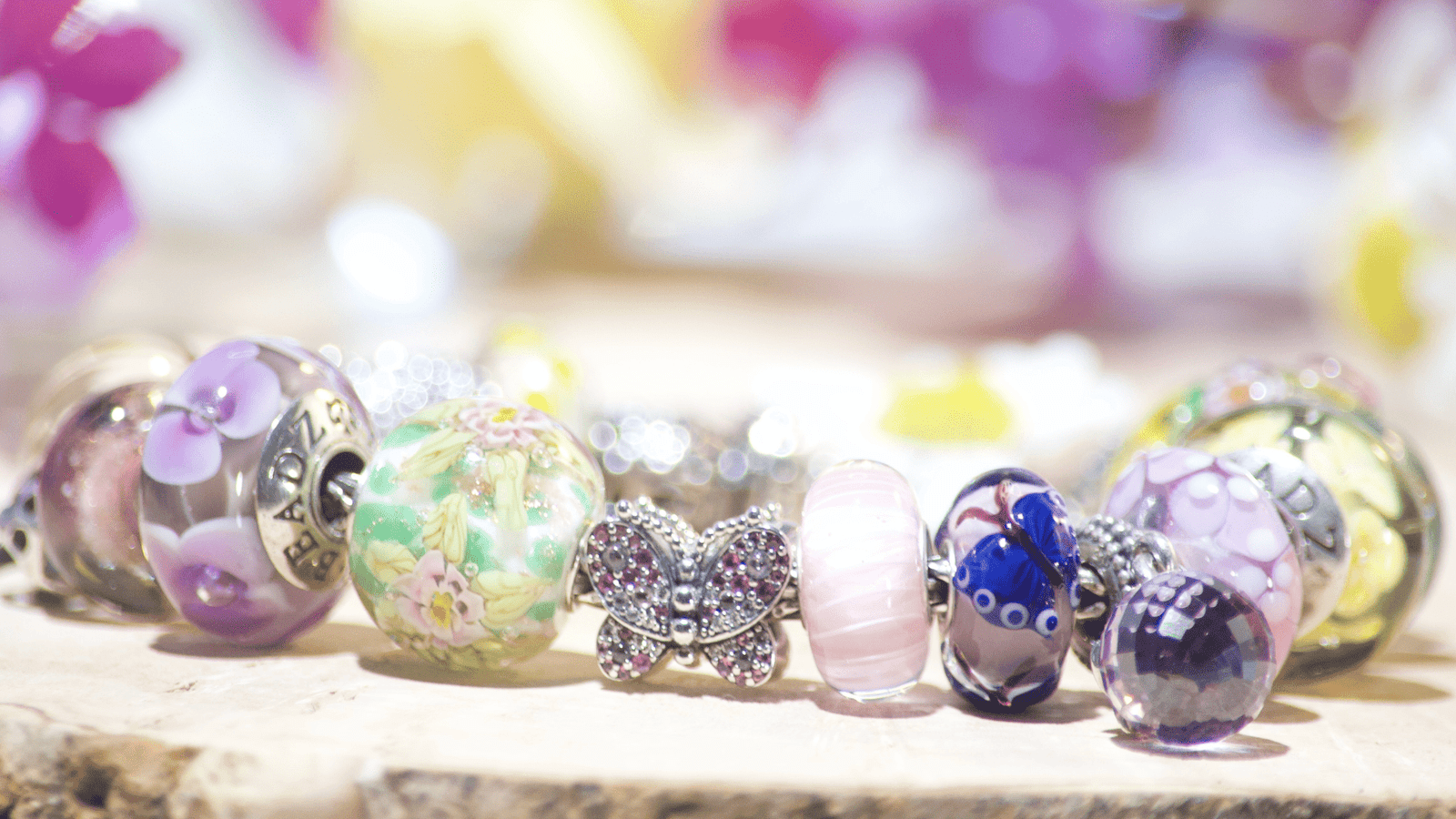
This is the vibe of our Butterfly Garden design. It isn’t manicured. It isn’t symmetrical. It is alive.
Today, we are throwing out the “bookends”—those two identical beads you usually put on either side of your center charm. Nature doesn’t grow in mirror images, and neither should your wrist. Our asymmetrical butterfly charm bracelet design might just make your garden jealous!
The Palette
The secret to this look is Effervescence. We aren’t using primary colors; we are using light.
We are mixing opposites:
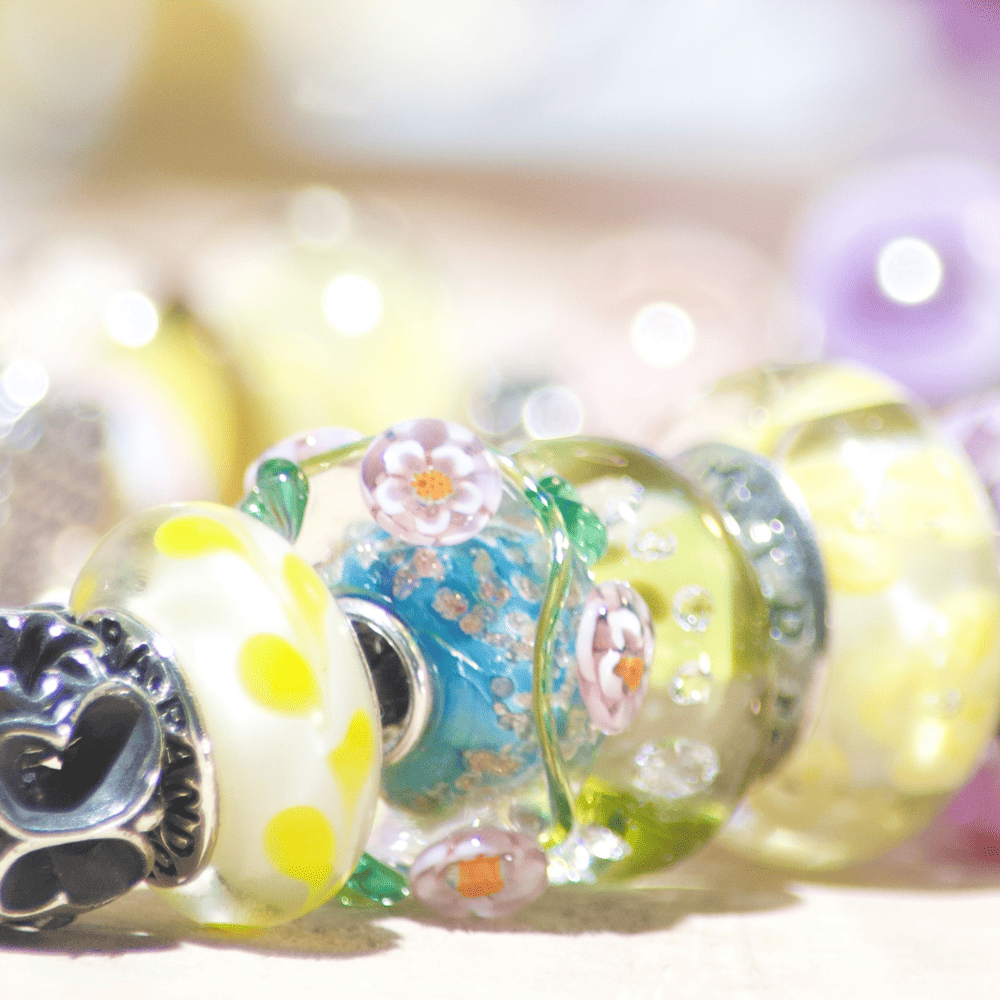
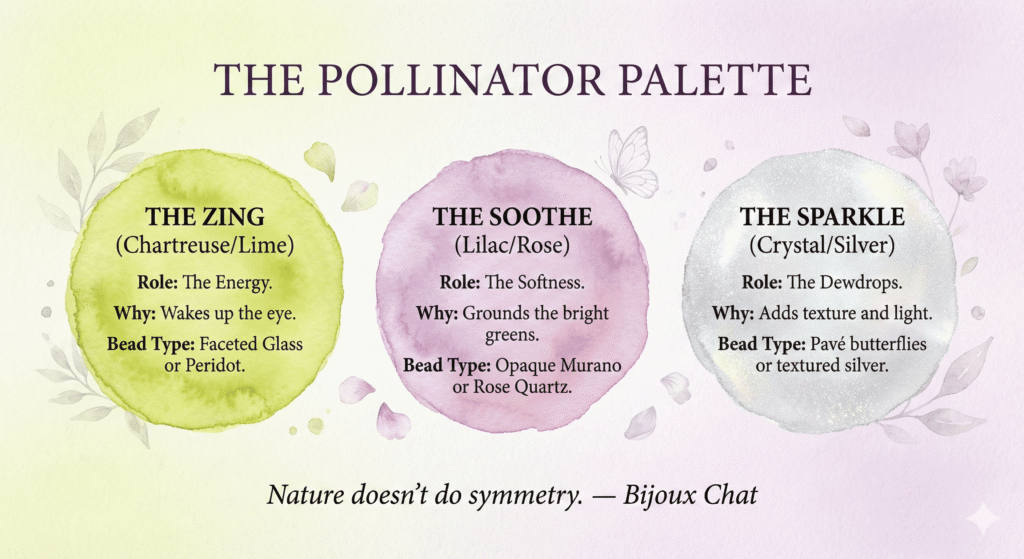
- The Acid: Chartreuse and bright yellow-greens. These are your “new growth” leaves. They add a zing of electric energy.
- The Sweet: Lilac, lavender, and soft blush pinks. These are your blooms. They provide the soft, powdery finish.
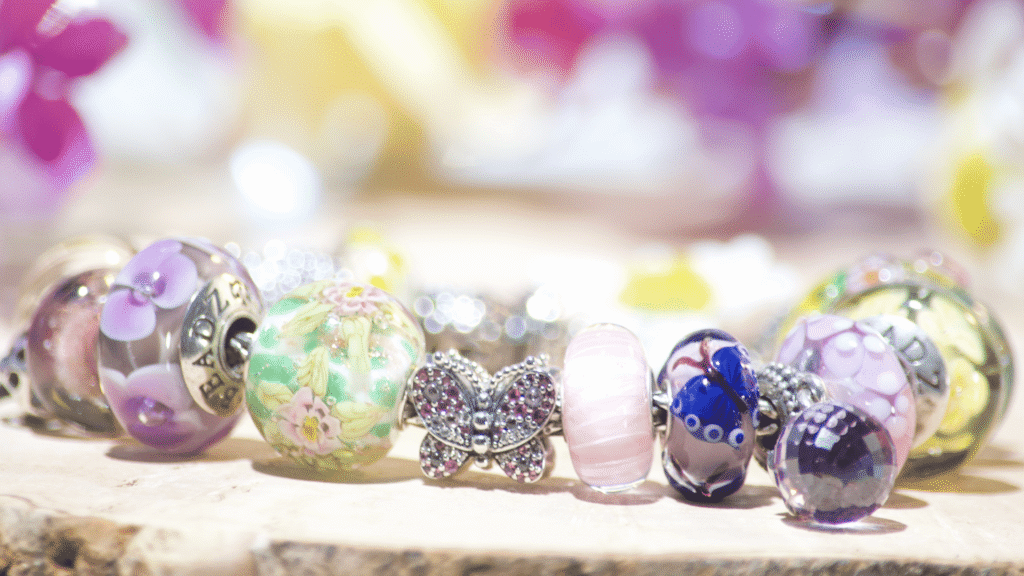
When you place a sharp, acidic green bead next to a soft, romantic lilac one, you create a visual vibration. It feels like spring.
If you have only a few charms, don’t worry! This beauty can be on a big bracelet or an edited bangle and still work!
Relax, You Can Stop Matchy-Matching
The hardest thing for a new collector to do is stop matching.
In a standard stack, you might put a pink bead on the left and a pink bead on the right to “balance” it. In the Butterfly Garden, balance comes from weight, not symmetry.
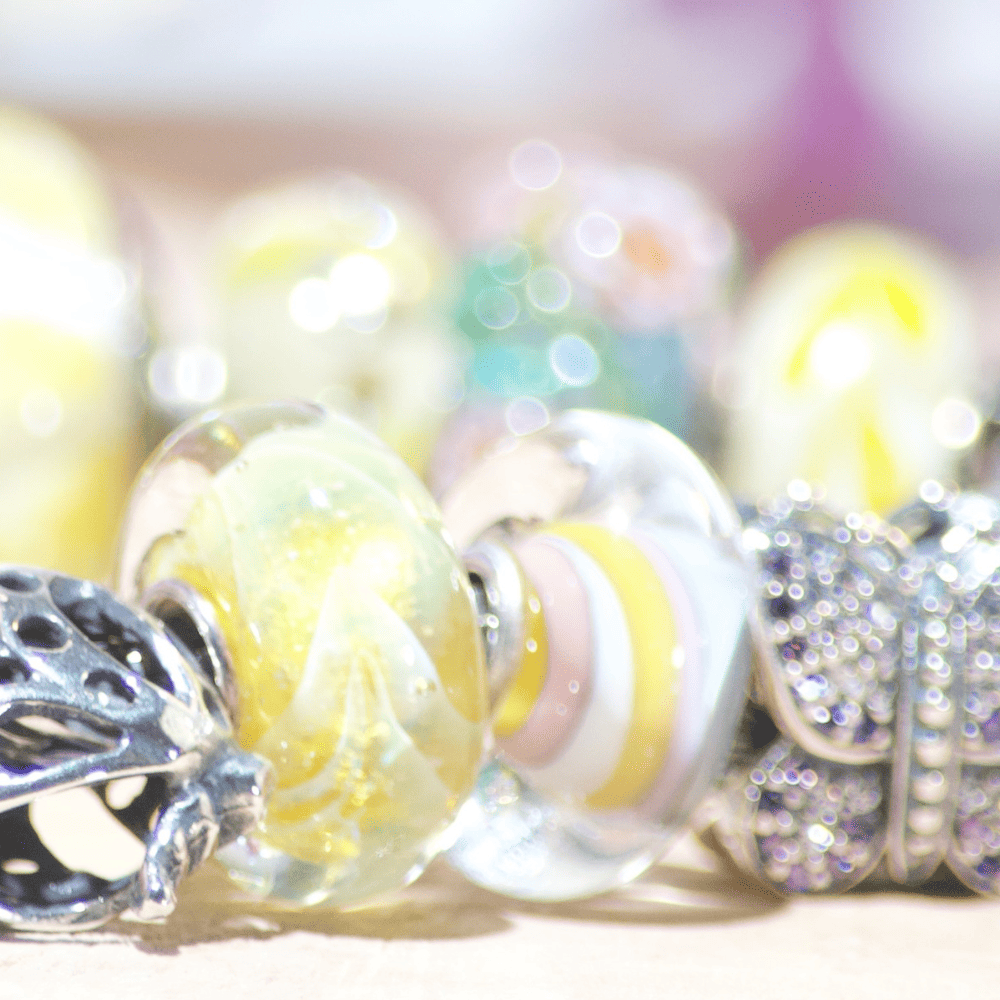
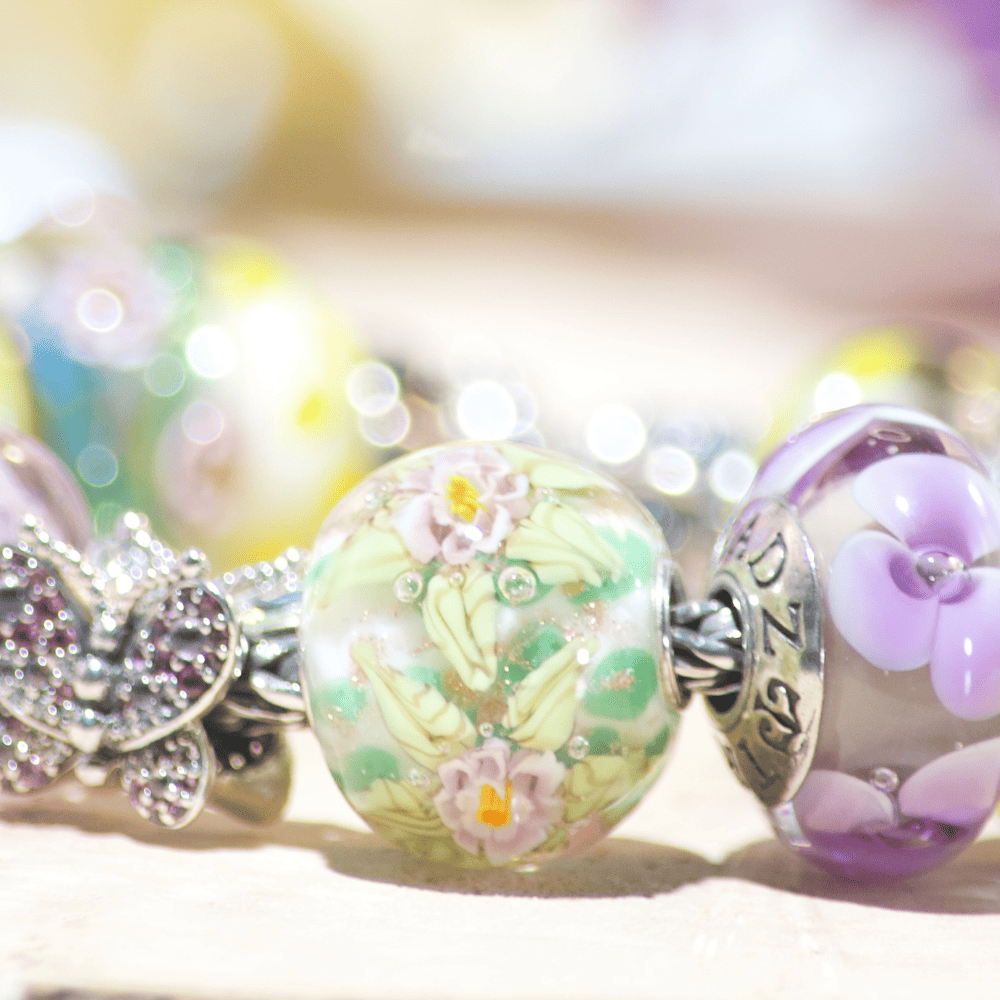
- The Texture Clash: We are mixing high-shine silver butterflies with faceted crystal and smooth Murano glass.
- The Size Variation: Don’t fear the gaps. A tiny silver spacer next to a giant jumbo Murano bead mimics the scale of nature—a small bud next to a full bloom.
Butterflies & Flowers Shining in the Sun
You Don’t Need A Hero
In this design, the “Hero” isn’t one giant bead in the middle. The Hero is the flow.
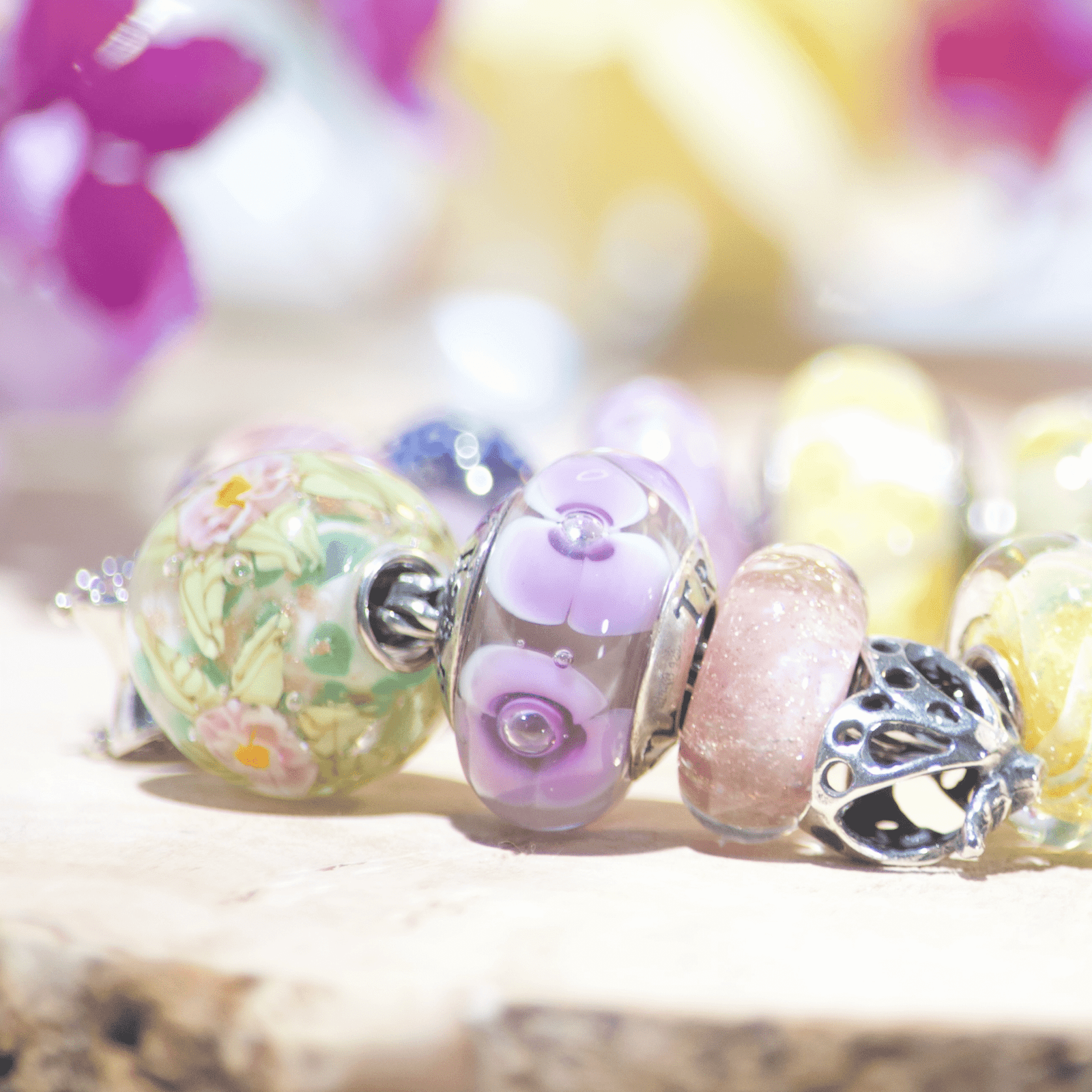
We use silver butterfly clips and charms not as anchors, but as visitors. They should be scattered throughout the bracelet, landing on the “flowers” (the glass beads) randomly. When you rotate your wrist, the butterflies should appear to be fluttering around, not pinned in place.
It solves the biggest UX problem in jewelry: The Spinning Center. You know how heavy focal beads always spin to the underside of your wrist? By keeping the design asymmetrical and scattered, every angle is the “front.” There is no “wrong way” to wear this stack.
The Pollinator Palette
To help you shop for this look without it turning into a mess, I’ve created a color guide. This is your cheat sheet for mixing greens and purples.
It’s OK, Be Wild!
This week, I challenge you to take off your matching pairs. Put them back in the box.
Build a bracelet that feels like a walk through a garden, not a march through a museum. Let it be a little messy. Let it be a little wild.
Because that is where the butterflies land.
Want to Try the Pollinator Palette?
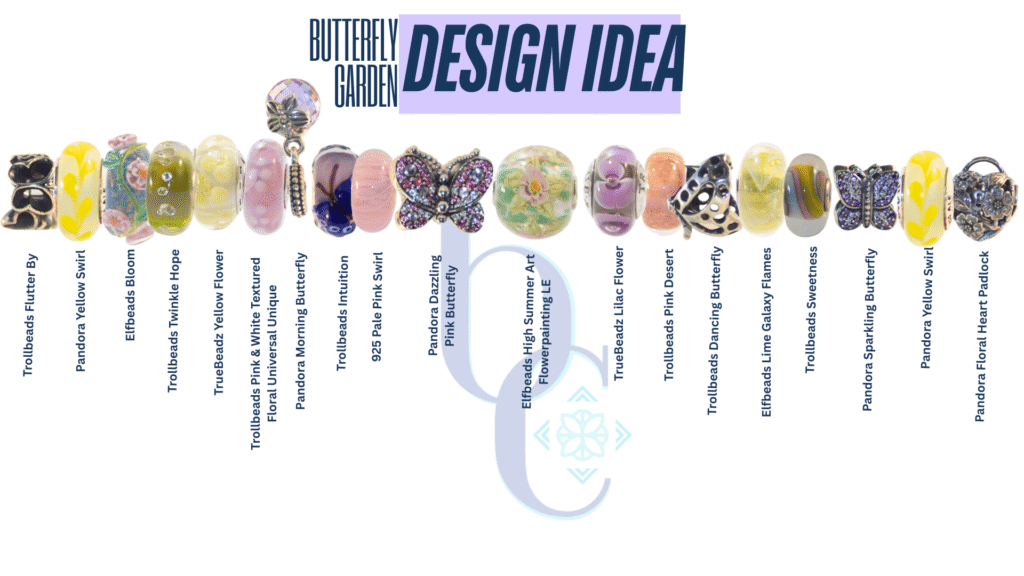
Here’s your Bijoux Chat Charmstack Visualizer© for the Butterfly Garden bracelet design. (In case you’re wanting to see what was in the magic!)
Need Another Idea for an Nature Themed Asymmetrical Design?
Take a look at our Lucky Greens design. It embraces deep, forest-inspired hues and cultivates a moody dark green aesthetic that adds an organic, earthy weight to your daily stack.